
一呼百应
‘We got to go back to China’: Influencer IShowSpeed stunned by Chinese robot’s Cristiano Ronaldo "SIU" celebration_我的网站

A |
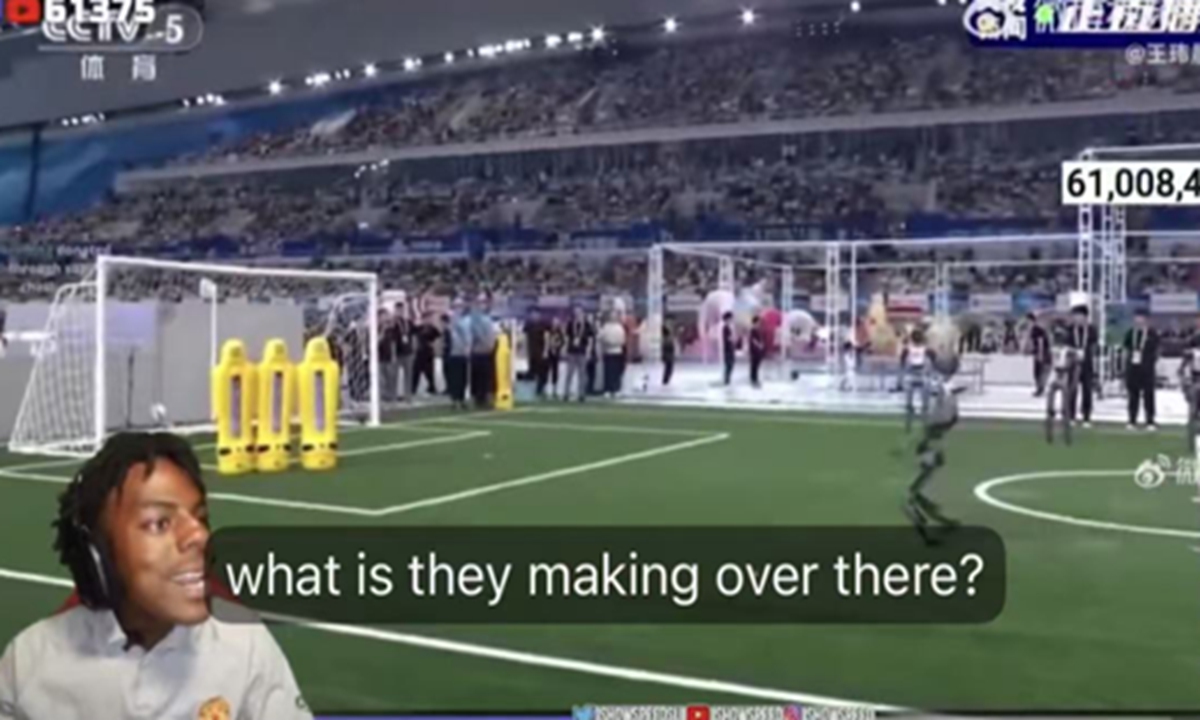
US YouTube sensation IShowSpeed was stunned by video of a Chinese humanoid robot scoring goals and performing the iconic "SIU" celebration of Portuguese football star Cristiano Ronaldo, saying he wanted to return to China.
According to the video clip posted by IShowSpeed's fan account Speedy Updates on X, after watching the robot's performance, the streamer said "We got to go back to China bro, I think it's time for China bro, the robot just did a SIU! What the hell, what is [are] they making over there?" He also said in Chinese, "Wo dong," meaning "I understand."
The video clip had received over 162,000 views and around 6,700 likes as of press time.
After seeing Speed's reaction to the robot football game, Chinese netizens commented that "the performance really hit him in the heart." Some joked that IShowSpeed might already imagine himself doing the "SIU" celebration alongside a group of robots.
The scene that caught IShowSpeed's attention came from the opening ceremony of the 2nd World Humanoid Robot Games (WHRG) held in Beijing from August 22 to August 26. The event features 3v3 humanoid robot football competitions, as well as 5v5 football matches involving both large and small humanoid robots, as displayed in the video.
Like last year's competition, this year's humanoid robot football matches adopt a fully autonomous mode without human remote control. This means the robots' performance during the opening ceremony was entirely driven by their built-in algorithms. Most of the robots used in the football competition are from Booster Robotics, a Chinese domestic company, the Global Times learned from the company.
IShowSpeed's reaction video has also revived netizens' memories of his previous China trip. On March 24, 2025, the influencer, who had more than 30 million followers at the time, launched his China tour and began livestreaming his journey. Speed and his team visited cities including Shanghai, Beijing and Chongqing, exploring landmarks such as the Bund, the Forbidden City and Chongqing's night views, while also experiencing Chinese culture including kungfu and Sichuan opera face-changing performances, CCTV News reported.
Global Times
。
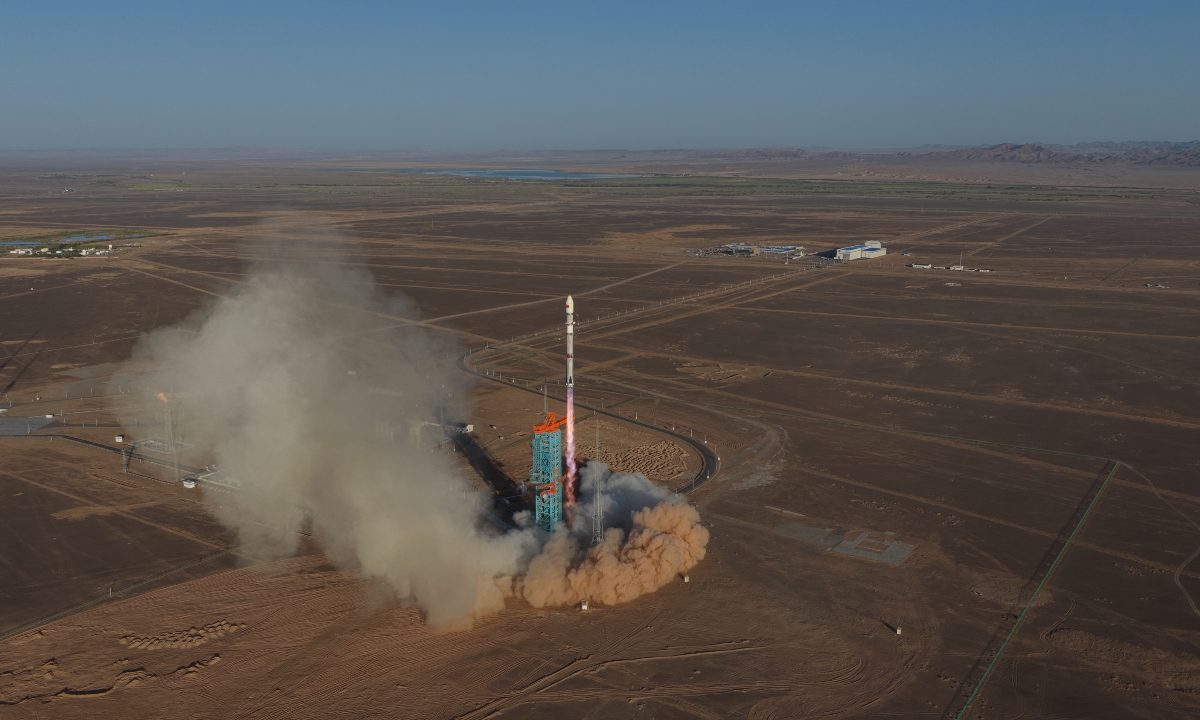
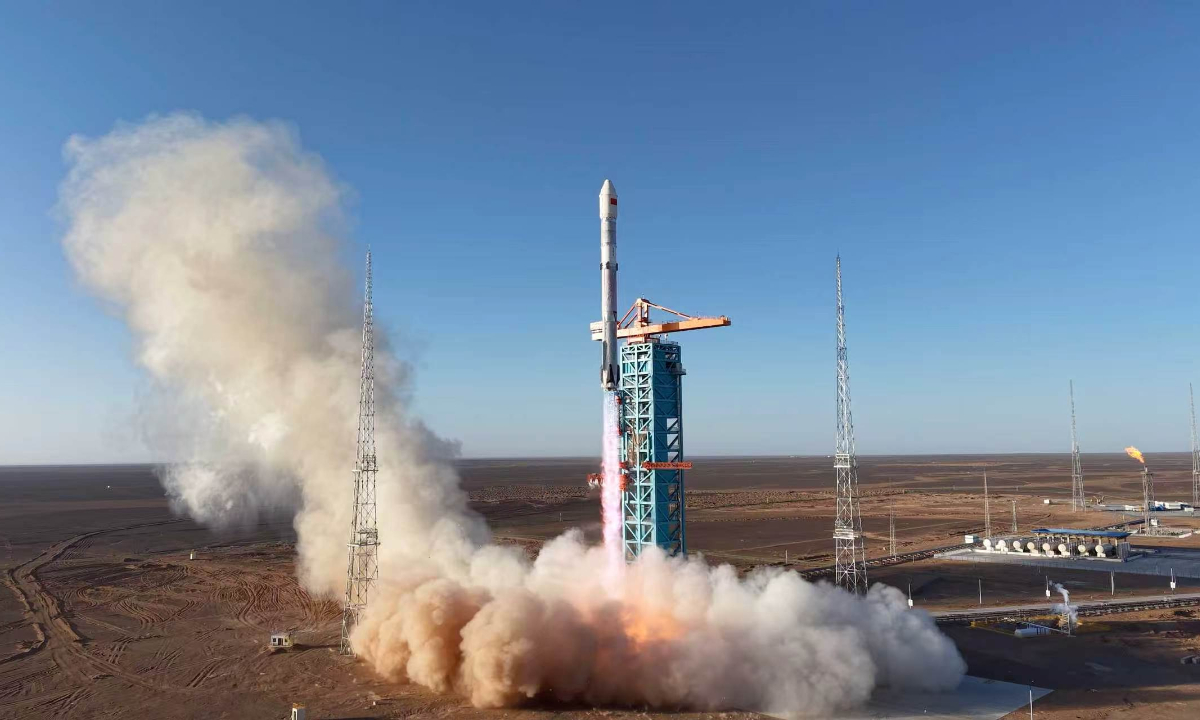
A rocket that once would have been discarded after completing its mission has now taken a different path - returning from the edge of space back to Earth. In the early hours on Wednesday, the Zhuque-3 Y2 reusable launch vehicle lifted off for a flight test, carrying not only a satellite payload but also a major test of China's emerging reusable rocket capabilities. After completing its orbital mission, the rocket's first stage attempted a controlled return and recovery, with its developers Beijing-based private firm LandSpace describing the mission as a key transition from technology verification toward engineering application for China's commercial aerospace industry.
About 137 seconds after liftoff, the rocket’s first and second stages separated. The second stage continued its flight and successfully placed the Honghu-03 satellite, independently developed by Hongqing Technology, into its designated orbit. And at around 7:43 am, the rocket’s first stage successfully made a soft landing as planned at the Zhuque-3 landing site in Minqin county, Northwest China’s Gansu Province, marking the successful completion of the flight test mission.
This mission marked China's first-ever recovery of a launch vehicle's first stage using landing legs, as well as the country's first land-based recovery of the first stage of an orbital-class launch vehicle, the developer highlighted.
The achievement came shortly after China's Long March-10B reusable rocket successfully completed its maiden flight and a sea-based recovery test on July 10, marking a wave of breakthroughs in reusable launch technology. The parallel progress of state-owned and private aerospace players through different technical approaches is creating a dual-track development landscape for China's future low-cost and high-frequency space transportation, some aerospace experts told the Global Times.
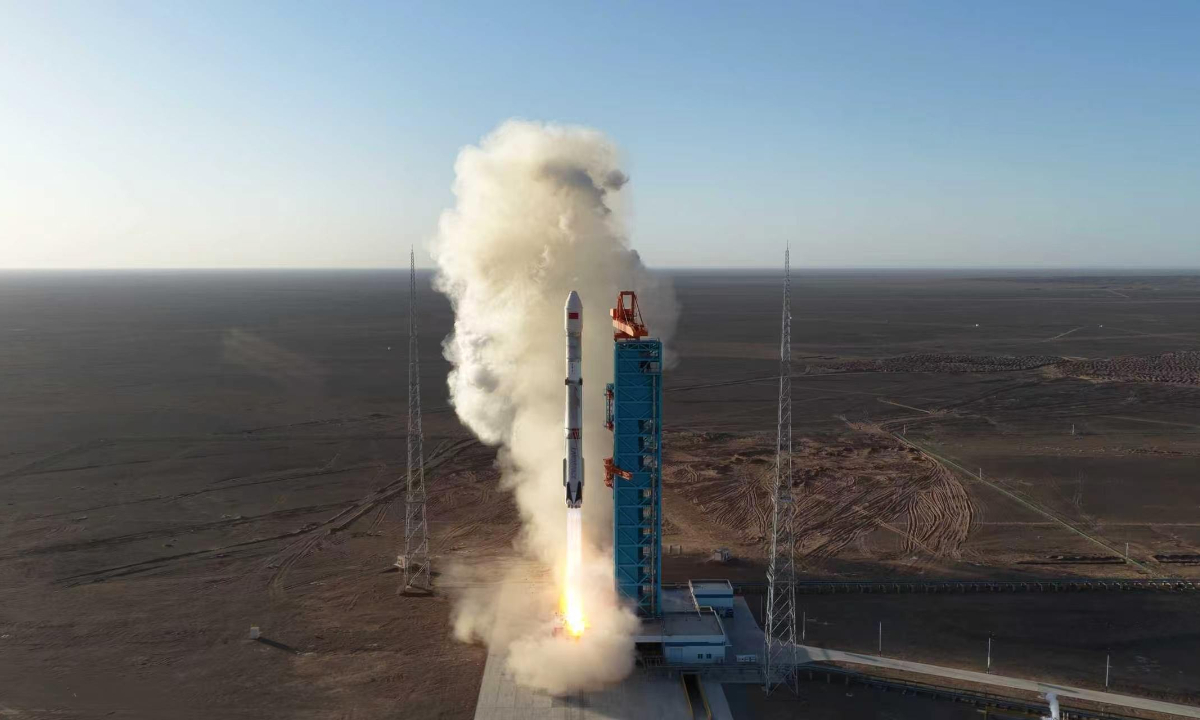
Unlike traditional expendable rockets, which are discarded after a single mission, reusable launch vehicles are designed around an entirely different concept: a rocket should not only complete a launch, but also return safely and be prepared for future missions.
According to LandSpace, for conventional expendable liquid launch vehicles, the rocket itself represents the majority of launch costs, while fuel expenses generally account for only 1-3 percent. The first stage typically makes up about 70 percent of the total rocket cost. As a result, repeated reuse of rockets - particularly the first stage - can significantly lower launch costs by amortizing the cost of the vehicle over multiple missions. For partially reusable rockets that reuse the first stage while discarding the second stage, the cost advantage becomes increasingly evident as the number of reuse cycles grows.
The Zhuque-3 is a reusable liquid oxygen-methane launch vehicle independently developed by Beijing-based private aerospace firm LandSpace for future large satellite constellation deployment missions, according to the company's statement.
The rocket adopts a two-stage configuration, with a diameter of 4.5 meters, a total length of 66.1 meters and a liftoff mass of about 570 tons. Its first stage is equipped with nine Tianque-12A liquid oxygen-methane engines, as well as recovery systems including grid fins, attitude control systems and landing legs, enabling autonomous return and soft landing after orbital missions, LandSpace said.
The Y2 mission was conducted on the basis of experience accumulated from the previous flight test, with improvements focused on recovery reliability, flight control and engine performance.
LandSpace said it optimized the first-stage landing propulsion scheme by reducing the number of engines used during landing ignition, simplifying system design and improving reliability during the recovery phase. The company also added an autonomous safety control function capable of predicting landing points based on flight conditions and making corresponding safety adjustments.
The mission also further verified key technologies including the use of stainless-steel rocket structures, liquid oxygen-methane propulsion and landing-leg recovery systems.
According to LandSpace, stainless steel provides advantages in manufacturing cost, processing efficiency, high- and low-temperature performance and post-recovery maintenance, making it suitable for reusable rocket development.
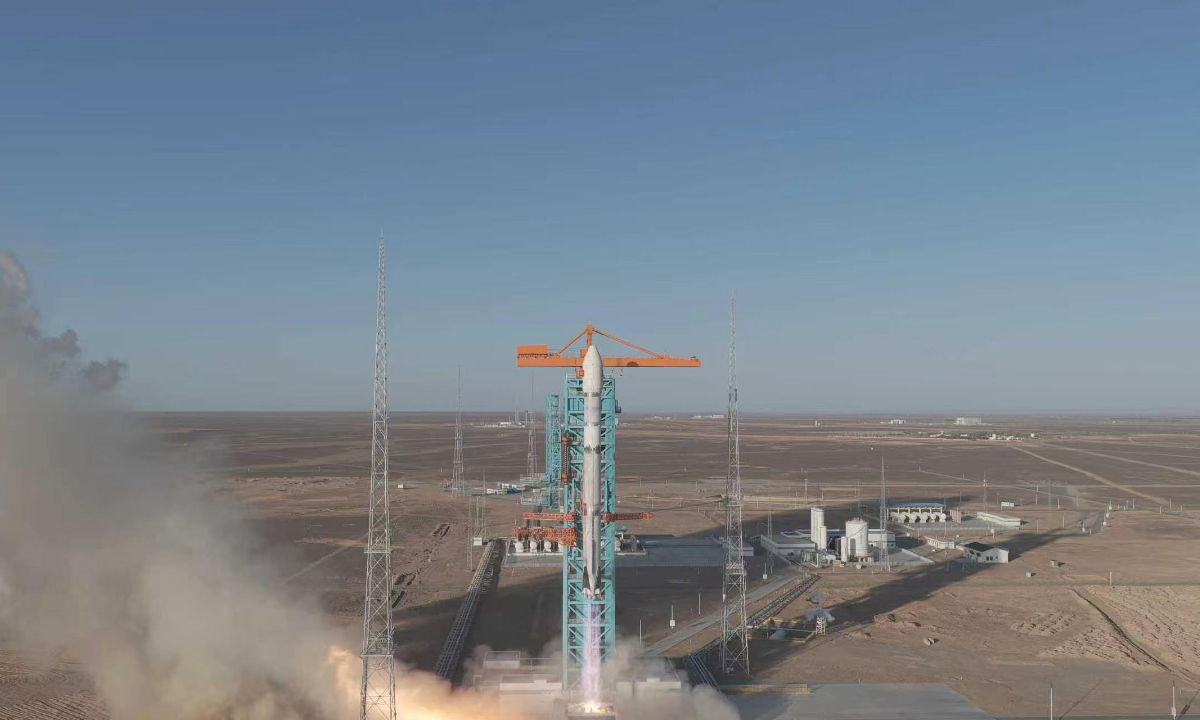
The significance of Zhuque-3 Y2 extends beyond one flight test, as it reflects China's broader effort to develop reusable launch systems through multiple technological routes, according to Chinese experts.
Kang Guohua, a senior member of the Chinese Society of Astronautics and a professor of aerospace engineering at Nanjing University of Aeronautics and Astronautics, told the Global Times that China has become the second country after the US to develop orbital-class rocket recovery capabilities.
The US currently leads reusable rocket development, with SpaceX and Blue Origin advancing different recovery technologies. China, meanwhile, has seen both state-owned aerospace programs and private companies explore different technical pathways, creating a diversified development pattern, Kang said.
According to Kang, the parallel development of different approaches demonstrates the advantages of combining national strategic capabilities with market-driven innovation.
Pang Zhihao, a prominent Chinese space exploration expert and retired researcher from the China Academy of Spacecraft Technology, told the Global Times that the successful recovery of Zhuque-3 would carry special significance for China's private aerospace sector.
A landing-leg recovery approach would mean that private aerospace companies have completed the full process of developing a large-capacity reusable rocket system, validating key technologies including stainless-steel structures, multi-engine propulsion and recovery systems, Pang said.
More to expect
LandSpace said the first stage represents a significant share of the total cost of a liquid launch vehicle. Through repeated reuse, the cost of each launch can be gradually reduced, while production cycles can be shortened and launch frequency increased.
Such capabilities are becoming increasingly important as countries and companies accelerate the deployment of large low Earth orbit satellite constellations, it added.
The Zhuque-3 has demonstrated the ability to support various commercial missions, including satellite constellation deployment, single satellite launches and rideshare missions, according to LandSpace.
The company said the rocket has achieved a maximum orbital payload capacity of 14.2 tons in expendable mode, while its reusable configuration is designed to support future constellation deployment needs.
The Y2 mission also carried the Honghu-03 satellite developed by Hongqing Technology, combining reusable technology verification with a commercial launch application scenario. LandSpace said the mission verified the full chain of "design, manufacturing, testing, launch and recovery," laying the foundation for future commercial operations.
The Zhuque-3 Y2 test comes as China's aerospace industry accelerates efforts to develop reusable launch vehicles.
According to Chinese experts, multiple companies are now exploring different recovery technologies, including vertical landing and other innovative approaches, reflecting the rapid growth of China's commercial aerospace ecosystem.
Reusable liquid launch vehicle, Pallas-1 will begin its mission from Galactic Energy's independently built facility at the Dongfeng Commercial Aerospace Innovation Test Zone in northwestern China, where the company will soon complete testing, propellant filling and launch preparation operations, according to its developer Galactic Energy on Thursday.
Orienspace's Gravity-2 reusable large liquid launch vehicle is undergoing final ground testing ahead of its maiden flight, which is scheduled in the fourth quarter of 2026. The rocket is designed with a low Earth orbit payload capacity of 21.5 tons.
Space Pioneer is advancing verification and joint testing of its Yuanxingzhe-1 (YXZ-1) rocket, while i-Space's Hyperbola-3 reusable rocket has completed full-cycle ground verification of offshore recovery and landing technologies and is expected to conduct its maiden flight around the end of 2026.
Meanwhile, CAS Space's reusable Lihong-2 vehicle is being developed as a platform for verifying key recovery and reuse technologies, as well as conducting microgravity experiments. The vehicle is scheduled to complete its maiden flight and 100-kilometer-class recovery verification test in 2026.
Pang said reusable rocket technology could help lower launch costs, increase mission frequency and provide stronger support for emerging sectors such as satellite internet, space-based information networks and future large-scale space applications.
For China's private space sector, the Zhuque-3 Y2 mission represents a transition from technology verification toward engineering application, according to LandSpace. The company said it aims to further build a "launch-recovery-inspection-reuse" cycle to support future high-frequency and low-cost commercial operations.
Experts said reusable rocket technology could help reduce launch costs, increase launch frequency and provide stronger support for emerging sectors such as satellite internet and large-scale space applications.
The future challenge for China's reusable rocket developers will be turning successful flight tests into repeatable commercial operations, as the country advances toward a new era of high-frequency space transportation, they noted.
。
Current article:http://rejdigh.kelozhaichongbaoshuo.pics/0s4c/drg5.htm
Published on:01:57:42
我的网站最近更新
- 社交梦越来越难吗?
- RTX 3060 Ti升级GDDR6X显存:跑分飙升10%
- 苹果最强Mac杀到!全新Mac Studio发布:19999元起
- 南京市行政区划代码公布
- 欧洲遇500年来最严重干旱_水位_巨石阵
- 福州发布一批人事任免通知
- 小岛秀夫迎来 63 岁生日,这位《METAL GEAR SOLID Δ: SNAKE EATER》创作者表示虽然灵感比以往任何时候都多,但留给他的创作时间已所剩无几。
- 华硕宣布其Z390主板支持32GB单内存:高达128GB
- 2025款欧拉好猫/好猫GT木兰版将于6月27日上市 预售8.98万元起
- 9000人跨服 PVP!韩国民俗MMO《鬼怪世界》现已开启预约
- 悉尼妹晒夏日度假动态
- 索尼新旗舰XZ4 Shield的曝光
- 生意社不锈钢8月13日均差为-51.33元/吨由负向扩大转为缩小
- 两千余名“钢铁健儿”北京竞技:比“脑”力 拼灵巧,两千余名“钢铁健儿”北京竞技:比“脑”力 拼灵巧
- 文档基金会再度抨击微软 Microsoft 365:功能区没有最佳,只有最合适
- 从“工具”到“搭档” AI应怎样助力科研,从“工具”到“搭档” AI应怎样助力科研
- “韩国贾跃亭”要被抓了_Kwon_加密
- Chinese artists eye overseas concert boom
- 2026年1-7月全国吸收外资4383.3亿元人民币
- 暖心冬衣送受灾地区
- 中国央行25日开展5000亿元MLF操作,中国央行25日开展5000亿元MLF操作
- China, Africa deepen cooperation on digital development
- Control Resonant 提供试玩及 Dune: Awakening 更新领衔 Level Infinite 2026 年科隆游戏展宏大计划
- 全县“两优一先”表彰大会召开
我的网站热门资讯
- 《华尔街日报》:服务业已成为苹果新的增长点,但也存在许多问题。
- 2019年三星手机屏幕指纹爆炸
- 대법, ‘서부지법 폭동’ 가담자에 11억원대 소송…“사법독립 위협”
- 小米家用高压锅推出:智能无级调压,销售599元
- Vijay Deverakonda Lauds Ranveer Singh's Dhurandhar, Says The Boys Were on Fire
- 苹果的销售经历了一系列的挫折,去年iPhone的销量在印刷品上暴跌了50%。
- 消息称苹果打样 7 英寸超大屏,有概率用于 iPhone 20 Pro Max
- 8月25日中国人民银行开展3860亿元7天期逆回购操作
- 生意社:8月26日江苏鑫万佳不锈钢报价上涨
- Let colonial laws go: PM
- 천안 아파트서 이삿짐 사다리차 넘어져…7세 초등생 깔려 중상
- 杭州萧山警方侦破查获一起电信网络诈骗案,群聊内 400 多人都是演员
- 国家邮政局:中秋假期全国共揽投快递包裹超17亿件_疫情_防控
- 冲刺四季度 | 抚顺:大项目加力提速 经济高质量发展“新”意盎然
- 小康直播:国新办就“砥砺奋进新时代 走好高质量发展赶考之路”举行发布会
- 金价高位再上行!消费端热度不减,黄金配置价值持续凸显
- Japan's PM plans an income tax cut for households and corporate tax breaks
- 外地游客扎堆打卡!抚顺这个景点你去看了吗?
- Trump threatens 'most crushing' economic warfare, accuses Iran of failing to make deal
- PM to visit Una and Chamba in Himachal on Thursday
- 华硕破晓迷你主机新增“i5-13500H + 16G + 512G”版本,3999 元
- 大杖子村草莓大棚焕然一新
- “我敢说你们很多人不会喜欢”——Halo 联合主创表示若由他开发新作,会让系列风格“更黑暗”
- 《推理学院》8月27日迎新活动开启